Launched in Fall 2024, the Digital Project Graduate Fellowship supports independent graduate research in the digital humanities. This new opportunity is open to all graduate students currently enrolled in the MSU Department of English, with the goal of fostering innovative, interdisciplinary projects that engage digital methods, tools, and theories. Each spring semester, one fellow will be selected to receive a $500 research award to support the development of a digital humanities project.
Spring 2026: Into The Penumbra by David Schwartz


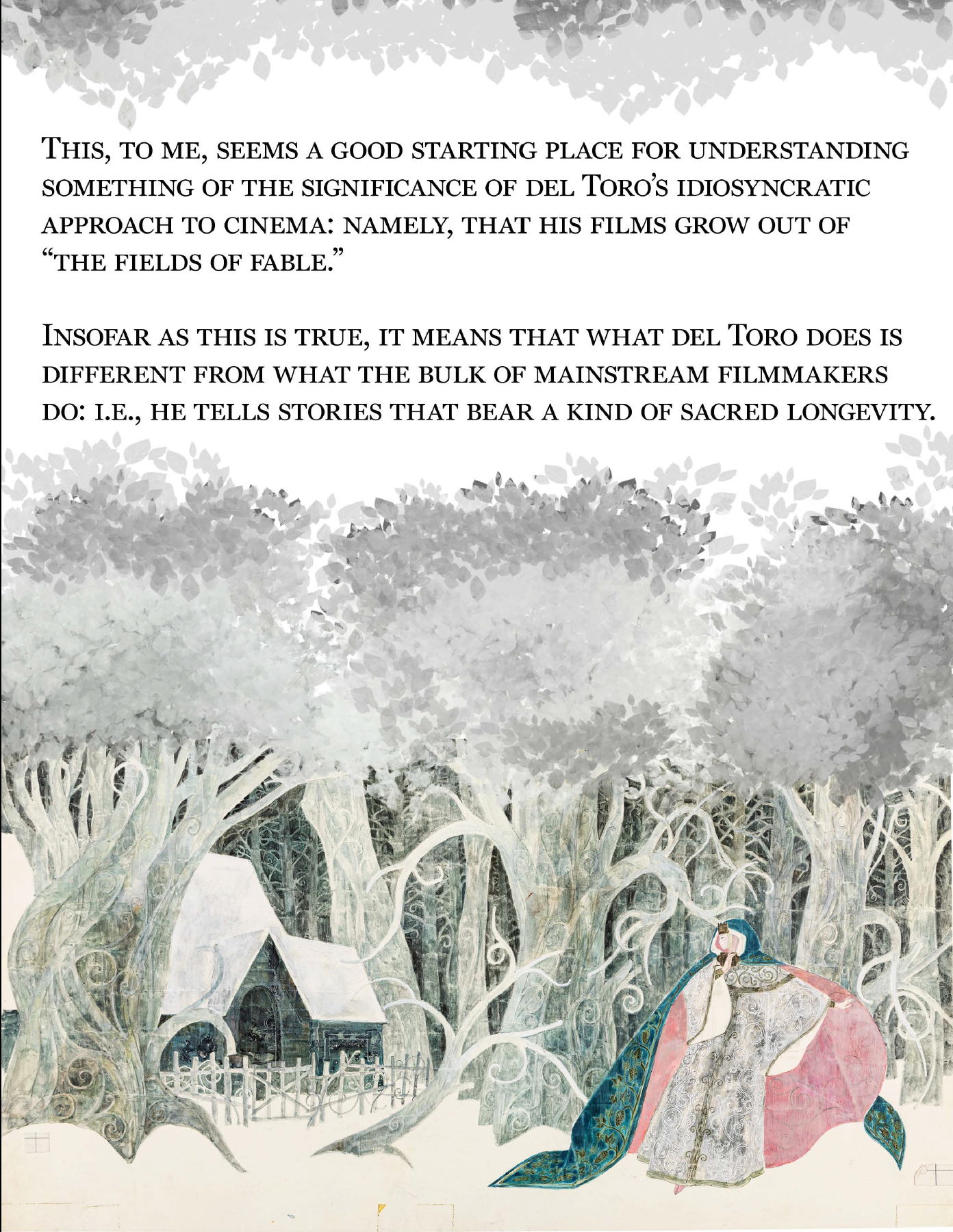

Into the Penumbra: On Guillermo del Toro’s Pinocchio (2023) and Cinematic Myth-Telling is a digital flip-book exploring how myths and fairy tales move from spoken and written traditions into cinema. Across twenty-six illustrated pages and approximately 3,000 words, the project combines critical analysis with the visual form of a storybook.
Each page was designed individually in Adobe Photoshop using film stills, storybook illustrations, classic artworks, and carefully edited photographs of the filmmakers, artists, and thinkers who shape the project’s argument. These figures include J. R. R. Tolkien, Alice Rohrwacher, and Guillermo del Toro. I also created several original illustrations with Photoshop’s digital brush tools. The finished work represents four months of writing, design, editing, and experimentation.
The project passed through several forms before reaching its final version. It began as a self-guided online museum, then became a digitally constructed “museum wall,” with narrative elements. These formats helped clarify the project’s themes, but they did not provide the visual control or audience experience I wanted.
I ultimately committed to the storybook and fairy-tale aesthetic that defined the final version. After testing PowerPoint, Canva, and other programs, I returned to Photoshop and rebuilt the project with new pages, images, and compositions.
At its center, Into the Penumbra examines the relationship between words and images. It argues that cinema inherits myths such as Pinocchio not only by repeating familiar plots or morals, but also by drawing upon a long history of artworks, illustrations, visual symbols, spiritual traditions, and philosophical ideas. Digital design made it possible to layer these materials into a unified visual argument while allowing the project’s final form to emerge through the process of making. The result invites readers to experience criticism as both an intellectual inquiry and a carefully crafted visual journey.
Female poets formed an essential cadre of the Harlem Renaissance; much of their work stayed within small press publications as well as anthologies published during that era rarely included in contemporary canons. This map gathers the threads of their poetry and lives together to visualize the life of each poet.
The map traces the birthplace and final resting place as well as where in the United States they were working during their literary contributions during the Harlem Renaissance. The map illustrates where and when these poets lived and worked and helps to fill out parts of the Harlem Renaissance story that has been obscured. A geographic and historical mapping of their lives and literary work is one step towards recovering new facets of this era in American history.
Various icons represent different events in the poets’ lives. The home symbol relates to places where they were born, lived, and died. The graduation cap represents places where they attended school. The book signifies locations where they worked. The ring is a symbol of where poets were married. The single music symbol shows the music company where Gwendolyn Bennett worked. The monument symbol is where Anne Spencer’s grave is — a place anyone can visit to this day.
What this map uncovers is the extensive movement the majority of the poets experienced over their lifetimes. With the exception of Anne Spencer all the women moved quite frequently and few were settled in Harlem during the Harlem Renaissance, rather they participated in the movement from other geographic locales and connected with the epicenter of cultural production through networks of relationships and publications. When thinking about relational connections within the black community at this time we see that spatial commonality mattered less than a shared desire to create and produce art.

April D. Best is a PhD student in the Department of English at Michigan State University. She received her BA in English and French and her B.Ed. from York University. She obtained her MA in Literature from Grand Valley State University. Her research interests include twentieth and twenty-first century poetry, environmental policy, transnational feminisms, digital humanities, feminist theory, environmental humanities, and Indigenous and Black feminisms.